How to Use Residential Proxies to Access Hidden Prices and Enhance Web Scraping
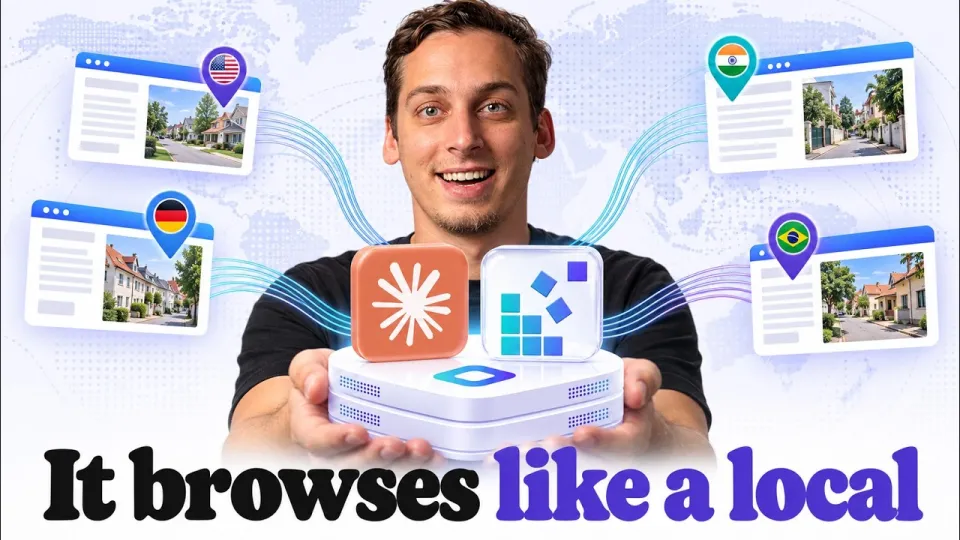
Video: This Claude Code Agent Uses Residential Proxies to Find Hidden Prices
Key takeaways
- Residential proxies use real home ISP IPs to appear as local users.
- Rotating residential proxies provide a fresh IP for each request to avoid blocks.
- Residential proxies reveal geo-targeted pricing unavailable via VPN or data center IPs.
- Claude Code agent automates scraping across countries using residential proxies.
- DataImpulse offers top residential proxy services for reliable web scraping.
Residential proxies allow users to bypass geo-restrictions and reveal hidden prices by routing requests through real home internet connections in target countries. Unlike VPNs or data center IPs, residential proxies use IP addresses assigned to actual residential ISPs, making it appear as if the user is a local customer. This is crucial for accessing region-specific pricing on services like Spotify, Canva, ChatGPT, and Netflix.
What Are Residential Proxies and How Do They Work
Residential proxies are IP addresses provided by Internet Service Providers (ISPs) to homeowners, which proxy services rent out to users. When you send a request via a residential proxy, it looks like it originates from a real residential user rather than from a data center or VPN server. This distinction is important because many websites flag or block data center IPs but accept residential IPs as legitimate traffic.
These proxies enable accurate geo-targeting because you can select proxies based on specific countries or even regions within a country, helping you access localized content or pricing. Residential proxies can rotate IP addresses automatically, providing a fresh IP for each connection or request. This rotation reduces the risk of detection and blocking during intensive tasks like web scraping.
VPN vs Residential Proxy: Key Differences
A VPN typically routes all your internet traffic through a single server, often a data center IP. This centralized approach makes VPN IPs easier to detect and block by websites that want to enforce geo-restrictions or prevent scraping.
In contrast, residential proxies distribute your traffic across many IP addresses tied to real home ISPs. Each request can come from a different residential IP, making it harder for websites to identify and block scraping attempts. Additionally, residential proxies allow granular country targeting by using IPs from specific geographic locations, which VPNs might not offer with the same reliability.
Using Residential Proxies for Web Scraping Pricing Pages
Residential proxies are particularly beneficial when scraping pricing pages for SaaS products or subscription services that enforce regional pricing. For example, Spotify Premium costs $12.99 in the US but only around $1.45 in India. Similarly, Canva Pro and ChatGPT have markedly different prices depending on the country.
To automate retrieving these prices, AI agents like Claude Code can be combined with residential proxies and tools like Playwright to navigate pricing pages from different countries seamlessly. This setup opens pricing pages through real ISP connections in the US, Germany, Brazil, and India, scrapes the data, and compiles a comparative pricing teardown without manual intervention or VPN reliance.
Benefits of Rotating Residential Proxies
Rotating proxies assign a new residential IP address for every request or session, which is vital for large-scale data collection. This rotation prevents IP bans and CAPTCHAs that often block static IP addresses used in scraping.
With residential rotating proxies, you can:
- Maintain anonymity and minimize detection.
- Access geo-specific content reliably.
- Scale web scraping projects without service interruptions.
Services like DataImpulse provide robust residential proxy networks with extensive global coverage and IP rotation features optimized for scraping tasks.
Practical Applications and Insights from Regional Pricing
Understanding regional pricing is valuable for SaaS providers, marketers, and analysts. By using residential proxies, businesses can:
- Monitor competitor pricing accurately across regions.
- Adjust their pricing strategies based on local market conditions.
- Detect unauthorized price discrimination or hidden offers.
The comparative analysis of Spotify, Canva, ChatGPT, and Netflix pricing across multiple countries reveals significant price gaps and localization strategies. This data helps companies optimize their global pricing and better serve diverse customer bases.
Common Questions About Residential Proxies
Residential proxies raise questions about legality, cost, performance, and ethical use. Addressing these concerns ensures informed decisions when adopting proxies for web scraping or accessing geo-targeted content.
Useful Links
- Residential proxies by DataImpulse (registration and bonus): https://dataimpulse.com/?utm_source=youtube&utm_medium=video&utm_campaign=lukasmargerie
- Claude Code AI agent: https://www.claude.com/product/claude-code
- Playwright for browser automation: https://playwright.dev
Итог
Residential proxies are essential tools for accessing hidden regional prices and enhancing web scraping by using real home ISP IP addresses with country-specific targeting and IP rotation. They outperform VPNs and data center proxies in avoiding detection and accessing geo-locked content. Using AI agents like Claude Code combined with residential proxies and Playwright automates pricing data collection efficiently. For those interested in exploring residential proxies, DataImpulse offers a reliable network to get started. This analysis is based on insights shared by the channel Lukas Margerie, a valuable source for web scraping and proxy technology expertise.
Source: This Claude Code Agent Uses Residential Proxies to Find Hidden Prices · Markdown version
Questions & answers
What are residential proxies and why are they better than VPNs for web scraping?
Residential proxies use IP addresses from real home internet connections, making them appear as local users. This helps avoid blocks that commonly affect VPNs using data center IPs, allowing reliable access to geo-targeted content and accurate web scraping.
How do rotating residential proxies improve scraping performance?
Rotating residential proxies assign a new IP address for each connection or request, preventing websites from detecting and blocking repeated access from the same IP. This reduces CAPTCHAs and IP bans, enabling large-scale, uninterrupted data collection.
Can residential proxies help reveal hidden prices on international websites?
Yes, because residential proxies route traffic through local ISPs in different countries, they enable users to see region-specific pricing that is otherwise hidden or inaccessible via VPNs or direct browsing, such as subscription rates on Spotify or Canva.
Is it legal and ethical to use residential proxies for scraping pricing information?
Using residential proxies is generally legal if done in compliance with website terms of service and applicable laws. Ethical use involves respecting data privacy, avoiding overload of web servers, and not engaging in fraudulent activities or violating user agreements.